


Table of Contents
- Why Flame Cooking Demands Better Seasoning
- How to Use a Dry Rub So the Flavour Survives the Fire
- The Best BBQ Rubs for Different Flame Profiles
- Smoked Salt for Barbecue: The Quiet Flavour Multiplier
- How to Store Spice Rubs Without Losing Their Edge
- What Separates Premium Seasoning Sourcing from Supermarket Jars
- Conclusion
- Frequently Asked Questions
Last Updated: October 20, 2026
Why Flame Cooking Demands Better Seasoning
Heat destroys flavour. That is the uncomfortable truth behind the best enhanced flavour for cooking over flame for premium seasoning sourcing, and it explains why so many supermarket jars disappoint on the grill. Direct fire pulls moisture from the surface of meat fast, and delicate aromatics burn off long before the food is ready. We think of seasoning as a structural layer, not a finishing touch.
A dry rub does three jobs at once. It draws out surface moisture so the crust can form, it builds a bark that protects the meat beneath, and it deposits flavour compounds that survive high heat. Get the blend wrong and you lose all three.
- Sugar burns before meat browns. High-sugar blends scorch at moderate temperatures.
- Salt penetrates; spice sits on top. Only salt travels deep into the muscle.
- Freshness fades fast. Ground spices lose their punch within months of opening.
That last point matters more than most cooks realise. A jar that has sat in a warm cupboard for a year will taste flat no matter how much you use.
How to Use a Dry Rub So the Flavour Survives the Fire
The best way to use a dry rub is to apply it early, keep it thin and even, and let salt do its work before the meat ever meets heat. Most people rub and cook in the same motion. That is the mistake.
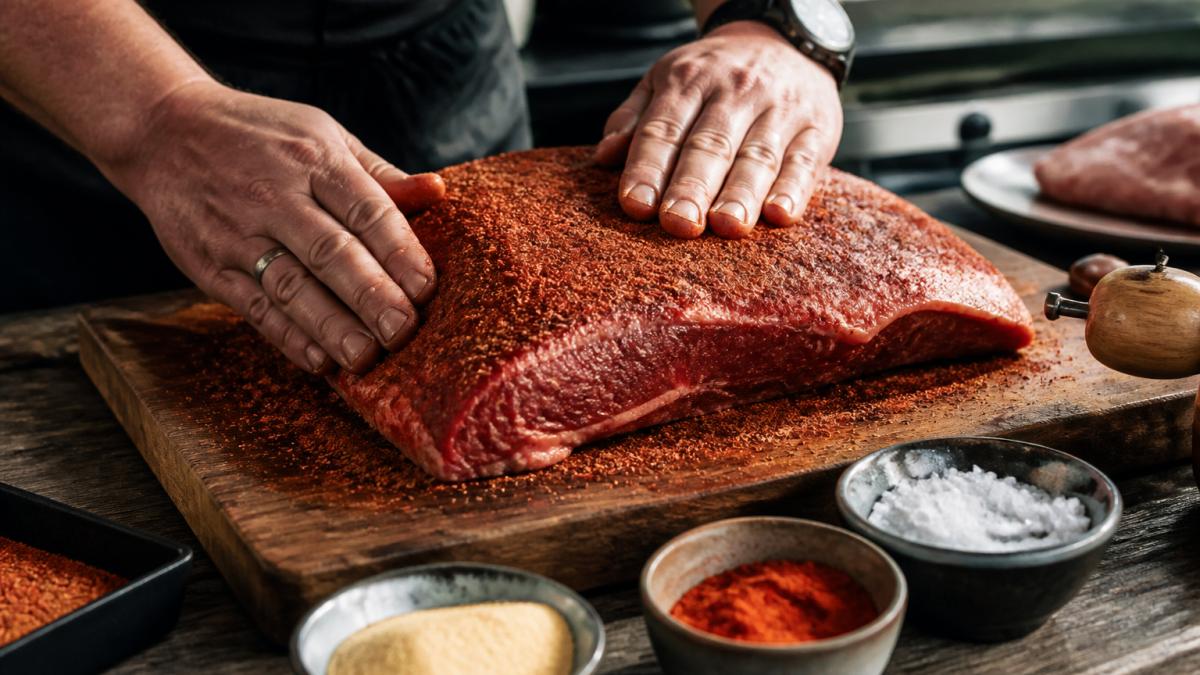
Here is how we would approach it:
- Pat the meat completely dry with kitchen paper.
- Apply a light oil layer so the rub has something to cling to.
- Season from height for an even coat, then press it in with your fingers.
- Rest uncovered in the fridge, ideally overnight.
- Bring to room temperature before it hits the fire.
Skip step four and you leave flavour on the board.
Patience, Salt and the Resting Window
Salt is the only ingredient that genuinely moves. Given time, it dissolves, draws moisture to the surface and then carries itself back in, seasoning the meat from the inside out. That process needs at least 40 minutes and works far better overnight.
Sugar and spice stay put. They sit on the surface and wait for heat. This is why a rub applied ten minutes before cooking tastes thin and dusty, while the same rub rested overnight tastes built-in.
The resting window also lets the surface dry slightly. A dry surface browns faster and forms a better bark, which is exactly what you want over open flame.
The Best BBQ Rubs for Different Flame Profiles
There is no single best BBQ rub choice, because flame behaves differently depending on how you cook. A fast, hot sear and a long, low smoke ask for completely different blends. Match the rub to the heat and the results improve immediately.

Matching Rub Style to Meat and Heat
Here is how we would pair rub styles with cooking methods:
| Flame Profile | Rub Style | Best For | Why It Works |
|---|---|---|---|
| Hot and fast sear | Salt, pepper, garlic (SPG) | Steak, beef ribs | No sugar to scorch; builds crust quickly |
| Low and slow smoke | Sweet, smoky, paprika-led | Pork ribs, shoulder | Sugar caramelises slowly into bark |
| Medium direct grill | Herb and citrus, low heat | Chicken, fish, vegetables | Bright notes survive shorter cooks |
| High heat with chilli | Pepper and cayenne forward | Wings, sausage | Heat holds up where delicate herbs fade |
For a hot sear, the Lone Star BBQ Rub is a clean, sugar-free option at £8.49, built on sea salt, Hungarian paprika and garlic. For low and slow pork, the Memphis Rib Rub balances sweet, savoury and spicy notes and is blended for that traditional bark.
Beef benefits from something with depth. The Black Magic Charcoal Beef Rub uses activated charcoal to darken the crust and deepen the bark on a brisket. Lighter meats want brightness instead: the Florida Cuban Mojo BBQ Rub brings citrus, garlic and herbs with zero chilli heat, and the Korean BBQ Umami Rub layers gochugaru, miso and ginger for something sweeter and spicier.


Smoked Salt for Barbecue: The Quiet Flavour Multiplier
Smoked salt for barbecue is the most underrated tool in the box. It adds a genuine woodsmoke note without any sugar, so it never burns, and it works on everything from steak to corn. Where a rub adds a full flavour profile, smoked salt adds one clean dimension.
Use it in three ways:
- Finishing salt. Crush a pinch over the meat after resting for a fresh smoke hit.
- Base layer. Season lightly with smoked salt first, then apply your rub on top.
- On the side. Sprinkle over grilled vegetables, potatoes or butter.
The advantage is control. You can dial smoke up or down without changing the rest of the seasoning.
How to Store Spice Rubs Without Losing Their Edge
The best way to store spice rubs is in airtight containers, away from light and heat, in a cool cupboard rather than beside the hob. Moisture and warmth are the two enemies, and most kitchens offer both in generous supply.
A simple routine keeps blends fresh:
- Decant into a small airtight jar you actually use
- Keep the bulk pack sealed in a dark cupboard
- Store away from the oven, kettle and window
- Never dip a wet spoon into the jar
- Label with the date you opened it
- Smell before each cook; flat aroma means flat flavour
Ground spices fade gradually rather than spoiling overnight. If a rub smells dull when you open the lid, it will taste dull on the meat. Buy in quantities you will finish, not the biggest bag on offer.
What Separates Premium Seasoning Sourcing from Supermarket Jars
Premium seasoning sourcing comes down to three things: how fresh the blend is, what goes into it, and how honestly it is made. Supermarket jars are built for shelf life and scale. Small-batch rubs are built for flavour.
The differences you can actually taste:
- Ingredient quality. Whole spices ground in small runs keep their oils far longer than bulk powder.
- Clean labels. No anti-caking agents, no added MSG, no fillers to bulk out the weight.
- Batch size. Small batches mean the jar reaches you closer to the day it was blended.
- Traceability. A maker who blends by hand can tell you what is in the jar and why.
We choose every rub we stock because we use it ourselves. That is the test that matters. If it does not earn its place on our own table, it does not go on the shelf. You can browse the full range and see the Santa Maria BBQ Seasoning Rub, the Boston Beach Jerk Rub and the Mississippi Master All Purpose Rub, all at £8.49, alongside the rest of our small-batch collection.
For home cooks who want to understand what good seasoning looks like from the source, the UK Food Standards Agency guidance on food additives explains what clean labelling actually means in practice. It is a useful benchmark when you compare jars.
Conclusion
Cooking over flame rewards cooks who season with intent. Apply your rub early, match the blend to your heat, keep your jars fresh and let salt do the quiet work. Do those four things and the fire stops fighting your seasoning and starts working with it.
That is where Ashwood and Salt comes in. Our small-batch rubs and smoked salts are blended by hand and chosen because we cook with them ourselves, so you can season with confidence every time. Shop the collection and give your next cook the flavour it deserves.
Frequently Asked Questions
What seasonings work best for cooking over an open flame?
Blends built on salt, paprika, garlic and pepper hold up best because they caramelise rather than scorch. Sugar-heavy mixes burn quickly over direct heat, so save those for low and slow cooking. A rub such as the Lone Star BBQ Rub, with sea salt, Hungarian paprika and garlic and no added sugar, suits high-heat grilling. Applying the rub 30 to 60 minutes ahead lets the salt draw moisture and flavour into the meat before it meets the flame.
How do you stop spices burning over a flame?
Keep the rub low in sugar, apply it close to cooking time and use indirect heat for anything with brown sugar or honey in the blend. Pat the meat dry first so the rub adheres evenly rather than clumping and charring in patches. If you are glazing, add sugary components in the final ten minutes. A light brush of oil over the seasoned surface also helps the spices toast gently instead of catching directly on the flame.
How should you store spice rubs to keep them fresh?
Keep rubs in airtight containers away from direct sunlight, heat and steam, which is exactly what the Santa Maria BBQ Seasoning Rub label advises. Store them in a cool cupboard rather than beside the hob or barbecue. Ground spices lose aroma within six to twelve months, so write the opening date on the jar and buy in quantities you will finish. Never dip a wet spoon or damp fingers into a rub, because moisture causes clumping and mould.
Can you use the same spice rub for meat and vegetables?
Yes, and it is one of the easiest ways to make a whole meal taste coherent. The Florida Cuban Mojo BBQ Rub works on chicken, seafood, pork and vegetables, and its citrus and garlic profile suits grilled corn and peppers just as well as meat. Season vegetables with a little oil first so the rub sticks, and use less than you would on a joint because vegetables take on salt faster. Keep a separate small bowl for vegetables if raw meat is also being seasoned.