


Table of Contents
- Start With the Beef, Not the Rub
- The Best Brisket Rub Starts With Salt, Pepper and One Extra Note
- How to Season a Brisket Without Overdoing It
- How to Get Bark on Brisket: Moisture Is the Whole Game
- The Right Brisket Rub for a Pellet Smoker
- Traeger, Pit Boss and Offset: Same Rub, Different Fire
- Conclusion
- Frequently Asked Questions
Last Updated: October 20, 2026
Start With the Beef, Not the Rub
A brisket rub is a seasoning blend built to work with a slow-cooked beef joint, and the beef decides what the rub should do. At Ashwood and Salt, we start every conversation about how to choose a BBQ rub for beef brisket with the same point: brisket is a working muscle. It is coarse-grained, well-marbled in places, and it gives up moisture slowly over a long cook.

That changes what you want from a seasoning. Salt needs to be present in real quantity, because it seasons deep into a thick joint rather than sitting on the surface. Pepper needs to be coarse enough to survive hours of heat without burning to dust. Sugar needs to be low, or it will catch and turn bitter before the meat is anywhere near done.
Get that order right and the rub does its job. Get it wrong and no amount of fire management will rescue the cook.
Why Coarse Grinds Suit Brisket
Coarse grinds suit brisket because a thick cut needs seasoning that dissolves gradually rather than all at once. A fine powder coats the surface and pulls moisture to the top, where it evaporates. A coarse grind sits in a layer, lets the joint breathe, and forms the base of a proper bark.
There is a practical test you can do at home. Tip a little rub into your palm and press it. If it disappears into the skin like flour, it is too fine for a long cook. If you can still see individual flakes of salt and cracked pepper, you are in the right territory.
The Best Brisket Rub Starts With Salt, Pepper and One Extra Note
The best brisket rub is a salt-and-pepper base with a single extra flavour note layered on top. That is the whole formula. Everything else is detail.
Salt carries flavour into the meat. Pepper builds the crust and gives that familiar savoury bite. The extra note is where you make the rub your own: garlic, a little mild chilli, smoked paprika, or a herb such as rosemary. One note, done well, beats five competing for attention.
A common mistake is buying a blend with a long ingredient list and expecting the brisket to taste of all of it. It will not. After eight hours in smoke, subtle spices vanish and bold ones take over. Choose the bold one you actually want to taste.
Reading an Ingredient Label Properly
Read the label in order. Ingredients are listed by weight, so the first three tell you what the rub really is.
- Salt first or second: good sign for a brisket rub
- Sugar in the top three: expect a sweeter bark that catches faster
- Long list of powders after the salt: flavour will fade in a long cook
- Additives and flavour enhancers: a clean blend does not need them
Our Lone Star BBQ Rub is a good example of the principle in practice. Sea salt, Hungarian paprika and garlic lead the blend, with no added sugar or MSG.
How to Season a Brisket Without Overdoing It
Season a brisket by coating it evenly and stopping when the surface looks dusty, not caked. Over-seasoning is the most common beginner error, and it is almost always salt-related.
Work in this order:
- Trim first. Rub cannot reach meat that is covered in a thick fat cap.
- Pat the surface dry. Wet meat steams and the rub slides off.
- Apply a light binder if you need one. A thin smear of mustard or oil helps the rub grip. You should not taste it afterwards.
- Season from height. Hold your hand well above the joint so the rub falls evenly rather than in clumps.
- Press, do not rub. Pat the seasoning into the surface and leave it there.
- Rest before cooking. Give the seasoned joint time in the fridge so the salt starts working.
A general guide is roughly one to two tablespoons of rub per kilogram of meat. Start at the lower end. You can always add, never take away.
How to Get Bark on Brisket: Moisture Is the Whole Game
Bark forms when a dry, seasoned surface spends hours in steady smoke and heat. Moisture is the deciding factor. A wet surface steams. A dry surface crusts.
That is why the steps above matter so much. Dry the meat, apply a coarse rub, and keep the cooking chamber humid enough to stop the joint drying out completely, but not so humid that the surface stays damp. The balance is the skill.
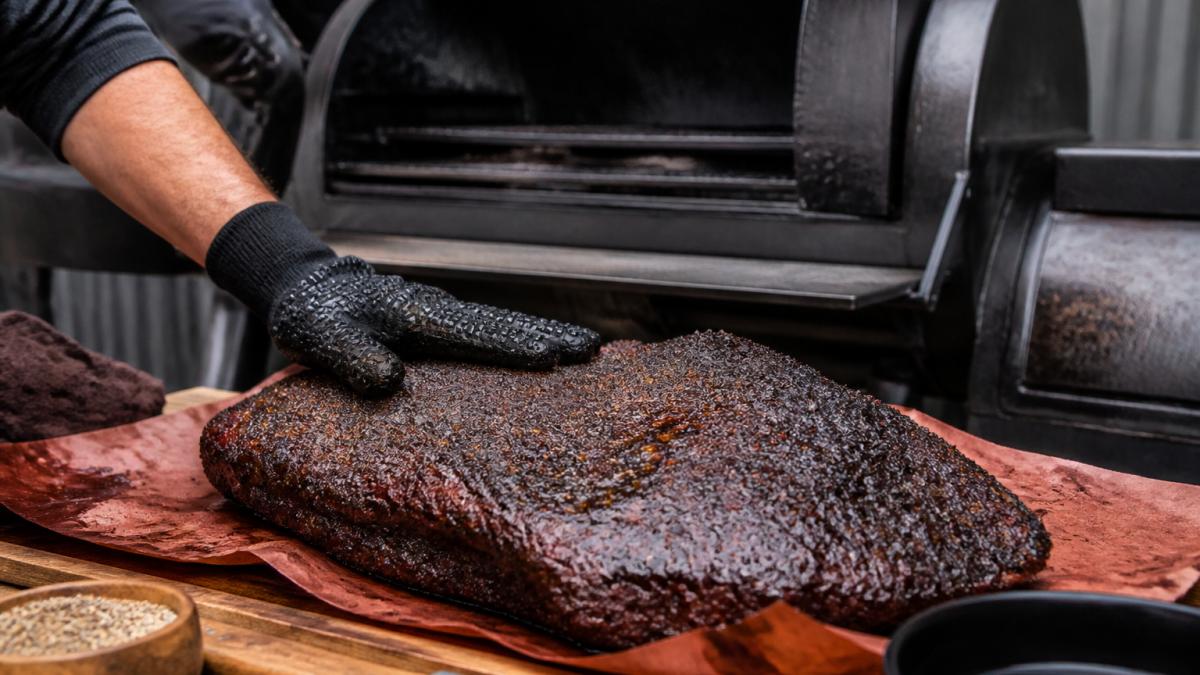
Sugar is the other variable. A rub with a lot of sugar will darken fast and can turn acrid. A low-sugar blend gives you more room to cook slowly and build colour gradually. Our Black Magic Charcoal Beef Rub is built around that idea, with activated charcoal for colour and a low-sugar base.

The Stall and the Wrap Decision
The stall is the point where the internal temperature stops climbing for an hour or more. It happens because evaporating moisture is cooling the meat as fast as the fire is heating it.
Black Magic Charcoal Beef Rub →
You have two choices. Push through unwrapped, which gives the firmest bark but takes longer. Or wrap in butcher paper, which protects the bark while speeding the cook. Foil is faster still but softens the crust. For beginners, butcher paper is the safer middle ground.
The Right Brisket Rub for a Pellet Smoker
A brisket rub for a pellet smoker should lean on coarse salt and pepper with modest sugar, because pellet cookers run clean and steady. There is less fierce radiant heat than an offset, so the surface dries more gently and the rub has time to do its work.
Pellet smokers also produce a lighter smoke flavour than a stick burner. That means your rub can carry a bit more character without being overwhelmed. A blend with smoked paprika or a mild chilli will still read clearly after a long cook.
Keep the rub coarse. Fine powders clog the airflow around the joint and can leave a pasty layer.
Traeger, Pit Boss and Offset: Same Rub, Different Fire
The rub can stay the same across all three cookers. The fire underneath it cannot. Each machine moves heat and smoke differently, and that changes how your seasoning behaves. Here is how we would approach each one.
| Cooker | Heat and smoke behaviour | Rub approach | Key watch point |
|---|---|---|---|
| Traeger | Even, indirect, clean smoke | Coarse SPG base, modest sugar | Keep the surface dry early |
| Pit Boss | Stronger direct heat zones | Low-sugar blend, heavier pepper | Rotate away from hot spots |
| Offset smoker | Radiant heat, heavier smoke | Bold, coarse, salt-forward | Manage the fire, not the rub |
Traeger
Traegers hold temperature well, so the risk is not fluctuation but laziness. Set it, and the joint cooks evenly for hours. Use that stability to your advantage: season the night before, keep the surface dry, and resist opening the lid to check.
Run your smoke setting for the first couple of hours to build colour, then raise the temperature to finish. Bark develops steadily rather than in a rush.
Pit Boss
Pit Boss cookers tend to have more pronounced hot zones across the grate. That matters for the rub because a sugary blend will scorch over the hottest area while the rest of the joint is fine.
Keep sugar low and pepper high. Place the brisket away from the direct heat, and rotate it once or twice so the bark colours evenly.
Offset Smoker
An offset gives you the most control and demands the most attention. Heat comes across the chamber from the firebox, so the end nearest the fire will always darken first.
Use a salt-forward, coarse rub and manage the fire in a small, clean burn. A smouldering fire produces dirty smoke that coats the rub in soot rather than building a clean bark.
Conclusion
Choosing a brisket rub comes down to fewer decisions than most guides suggest. Start with the beef, keep the blend coarse, lead with salt and pepper, and add one extra note you actually want to taste. Then control moisture and let the fire do its work.
If you want a starting point rather than a shopping list, our BBQ Legend three-rub gift set covers a salt, pepper and garlic base, a herby blend, and a charcoal beef rub, so you can find the profile that suits your cooker. Shop the Ashwood and Salt range and season with intent.

Frequently Asked Questions
What spices are best for a beef brisket rub?
Salt and coarse black pepper do most of the work, with garlic as the usual third element. From there, small amounts of paprika, onion, mild chilli or a little sugar add depth without masking the beef. Avoid blends where sugar sits near the top of the list, because sugar burns before a brisket finishes cooking. A rub such as a charcoal beef blend, with sweet caramel notes and mild chilli, gives you bark colour without tipping into dessert territory.
How much rub should you put on a brisket?
Enough to cover the meat in a visible, even layer with no bare patches, roughly one to two tablespoons per kilogram depending on the grind. A 5kg brisket typically takes 150g to 200g of rub. Apply it over a light binder, press it in gently, and stop before the surface looks caked. Too much rub on a long cook produces a bitter, salty crust rather than good bark.
How do you keep brisket moist without making the bark soggy?
Keep the water pan filled and the lid closed, spritz lightly and only after the bark has set, and wrap in butcher paper rather than foil once the surface is firm. Butcher paper breathes, so steam escapes while the bark stays intact. Foil traps moisture and softens the crust. On a pellet smoker, a water pan near the hot end does most of this work for you.
Can you use the same brisket rub on a Traeger, Pit Boss and offset smoker?
Yes, the rub itself does not change, but the application should. Pellet cookers run dry, so apply rub a little heavier and use a water pan. An offset smoker with a clean fire needs a lighter coat because airflow dries the surface faster. On a Pit Boss, watch the hot spot near the fire pot and rotate the brisket so the bark colours evenly.