


Table of Contents
- Why Seasoning Brisket for Smoking Demands More Than a Sprinkle
- What You'll Need Before You Season Brisket
- Brisket Binder Before Rub: Salt, Mustard or Nothing at All
- A Balanced Brisket Rub Recipe You Can Mix at Home
- How to Apply Rub to Brisket for Even Coverage and Bark
- How Long to Dry Brine Brisket Before It Hits the Smoker
- Common Seasoning Mistakes to Avoid
- Conclusion
- Frequently Asked Questions
Last Updated: 20 October 2026
Why Seasoning Brisket for Smoking Demands More Than a Sprinkle
Seasoning brisket for smoking is the step that decides whether twelve hours in the smoke rewards you with deep, peppery bark or a flat-tasting joint. Get it right and the meat carries itself. Get it wrong and no amount of good charcoal will rescue it.
Below, we'll show you exactly how to season brisket for smoking, from binder to bark, with the timing and technique that matter.
The core idea is simple. Brisket is a big, dense cut. Salt needs time to travel. Rub needs contact. Heat needs a dry surface to build bark. Most guides get the last part wrong.
What You'll Need Before You Season Brisket
Gather your kit before you touch the meat. Cold hands and a wet brisket are a bad combination.
- The brisket itself, trimmed and patted dry with kitchen paper
- Coarse salt, sea salt or kosher-style flakes, not fine table salt
- Coarse black pepper, freshly cracked
- Your rub, homemade or a small-batch blend
- A binder if using one: yellow mustard, hot sauce, or a light oil
- A wire rack and tray for resting the meat
- Cling film for the dry brine stage
- A sharp knife for trimming
Coarse salt matters more than people think. Fine salt dissolves fast and can oversalt a small area. Coarse salt spreads evenly and draws moisture at a steadier rate.
A sharp knife matters too. Trimming a brisket cleanly means less torn surface for rub to grip.
Brisket Binder Before Rub: Salt, Mustard or Nothing at All
A brisket binder before rub is the thin layer that helps spices stick. The three real options are mustard, oil, or nothing.
Mustard is the classic. It adds no mustard flavour after a long cook, and its slight acidity helps the rub cling. Oil works well for a leaner, cleaner finish. Nothing at all works if the meat is tacky and you apply rub firmly.
Here's what most guides miss. Binder is not a flavour decision. It is a glue decision. Choose it based on how well your rub sticks, not on what it tastes like raw.
If your rub is coarse and heavy on pepper, use a light binder. If it is fine and salt-forward, you can often skip it. Pat the meat dry first either way. Moisture is the enemy of a good bind.
A Balanced Brisket Rub Recipe You Can Mix at Home
A good brisket rub recipe is coarse, simple, and salt-forward. Here is a ratio we would use ourselves.
- 4 parts coarse black pepper
- 3 parts coarse sea salt
- 1 part garlic granules
- 1 part Hungarian paprika
- Half a part onion powder
- A pinch of cayenne for warmth, optional
Mix it in a bowl and use it within a few weeks. Freshly cracked pepper fades fast, so grind close to cook day.
This is a Texas-style base. It lets beef taste like beef. If you want more depth, a blended rub with caramel notes and activated charcoal can push bark colour further without overpowering the meat.

A word on ratios: brisket is forgiving, but oversalting is not. Weigh your salt if you can. A kitchen scales removes the guesswork.
How to Apply Rub to Brisket for Even Coverage and Bark
Even coverage comes from pressure and patience, not volume. Here is how to apply rub to brisket properly.
Lone Star BBQ Rub - Texas BBQ SPG Seasoning →
- Pat the meat completely dry.
- Apply binder thinly, if using.
- Sprinkle rub from height so it lands evenly.
- Pat it in firmly with flat hands.
- Work the edges and the point separately.
- Let it rest before cooking.
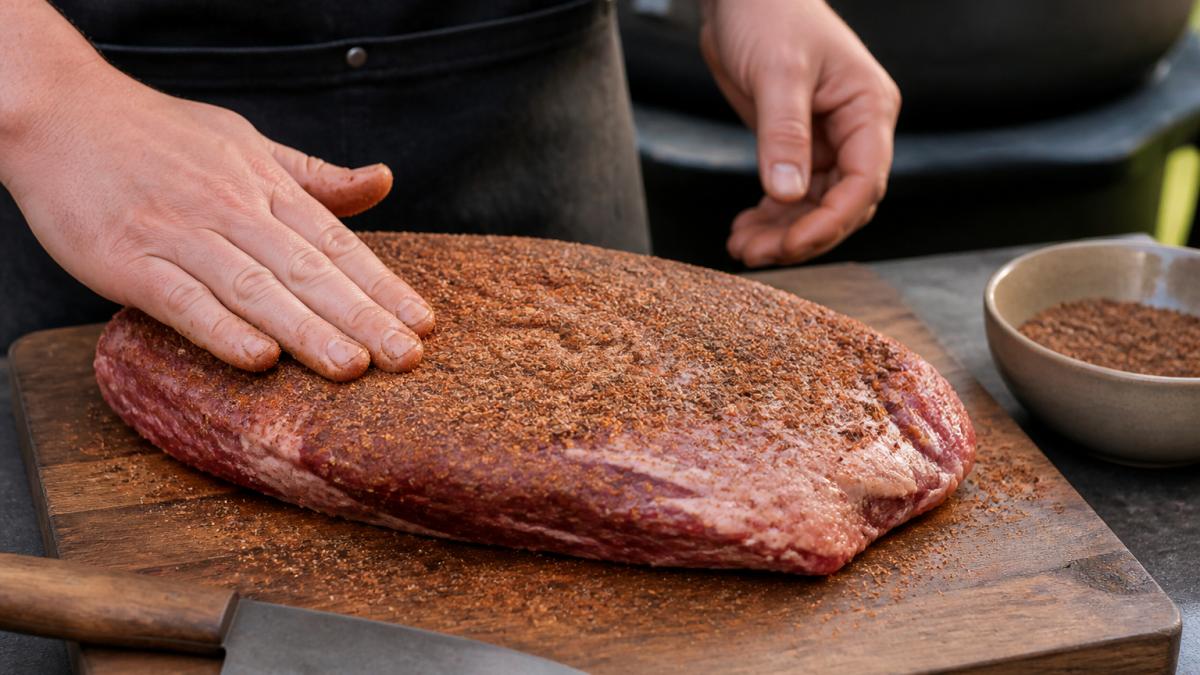
You want a full, even coat, not a thick crust of loose powder. Too much rub sits on the surface and burns before the meat is done. Too little and you get patchy bark.
What most reviews miss is the edges. The thin flat edge cooks fastest and takes on the most heat. Give it the same coverage as the centre, and no more.
How Long to Dry Brine Brisket Before It Hits the Smoker
Knowing how long to dry brine brisket is the difference between seasoned-through meat and salty surface only. The answer is 12 to 24 hours.
Salt needs time to move into the meat (pubmed.ncbi.nlm.nih.gov). A short rest flavours the crust. A long rest seasons the whole joint. For a full packer brisket, aim for the longer end.
Set the rubbed brisket on a wire rack, uncovered, in the fridge. The airflow dries the surface, and a dry surface is what builds bark. Cover it loosely after the first few hours if your fridge is crowded or the meat is very large.
Pull it out 30 to 60 minutes before it goes on the smoker. Cold meat fights the cook. A short rest at room temperature helps it start evenly.
Common Seasoning Mistakes to Avoid
Most brisket seasoning problems come from a short list of avoidable errors. Here are the ones we see most.
- Wet meat. Rub slides off and never binds. Pat dry first.
- Fine salt. Oversalts in patches. Use coarse.
- Too much rub. Burns before the meat is done.
- No rest. Skipping the dry brine leaves flavour on the surface.
- Stale pepper. Old pepper tastes flat and dusty.
- Uneven edges. Thin cuts scorch and turn bitter.
A common mistake is seasoning straight from the smoker's heat. Rub goes on cold, before the cook, never during.
If you want to skip the mixing, a small-batch rub blended by hand removes the guesswork. We build ours in small runs so the pepper stays fresh and the ratios hold.
Conclusion
Seasoning brisket is a craft step, and it rewards the patient cook. Dry the meat, choose your binder with purpose, apply rub firmly and evenly, then give salt the hours it needs.
Frequently Asked Questions
What is the best seasoning for brisket before smoking?
A simple salt and coarse black pepper base works well, but a balanced rub with paprika, garlic and a little sugar adds depth. The Lone Star BBQ Rub at £8.49 combines sea salt, Hungarian paprika and garlic for a classic Texas profile, while the Black Magic Charcoal Beef Rub adds activated charcoal for a darker bark. Choose based on whether you want a clean, peppery crust or a sweeter, smokier finish.
Should you use a binder before seasoning brisket?
A binder helps rub stick, especially on lean cuts. Yellow mustard is traditional and its vinegar tang fades during the cook. Light olive oil or a thin smear of Worcestershire sauce also work. For a dry brine, skip the binder entirely and let the salt draw moisture from the surface. Whichever you choose, apply a thin, even layer so the rub adheres without clumping.
How long should you dry brine brisket before smoking?
For a full packer brisket, 12 to 24 hours in the fridge uncovered is ideal. The salt draws moisture out, dissolves, and reabsorbs into the meat, seasoning it deeply. Smaller flats need only 4 to 8 hours. Always pat the surface dry before applying your rub if you dry brined first, and keep the brisket on a wire rack over a tray to allow air circulation.
Do you season brisket fat side up or down?
Season both sides, but place the brisket fat side up in the smoker if your heat source is below. The fat cap renders slowly, basting the meat as it cooks. If using an offset smoker with heat from the side, fat side toward the heat source protects the meat. Either way, apply rub to all exposed surfaces, including the sides, for consistent bark.
The real challenge is consistency. A great rub makes that easier, because the balance is already right. At Ashwood and Salt, we blend our rubs by hand in small batches, using coarse salt and fresh pepper so the ratios hold every time. Our Lone Star BBQ Rub brings that Texas-style SPG base to brisket, steak and ribs, while our handmade knives give you a clean trim to start from. Shop Ashwood and Salt and season with intent.